Osteopathy for office workers: neck, back, wrists and stress
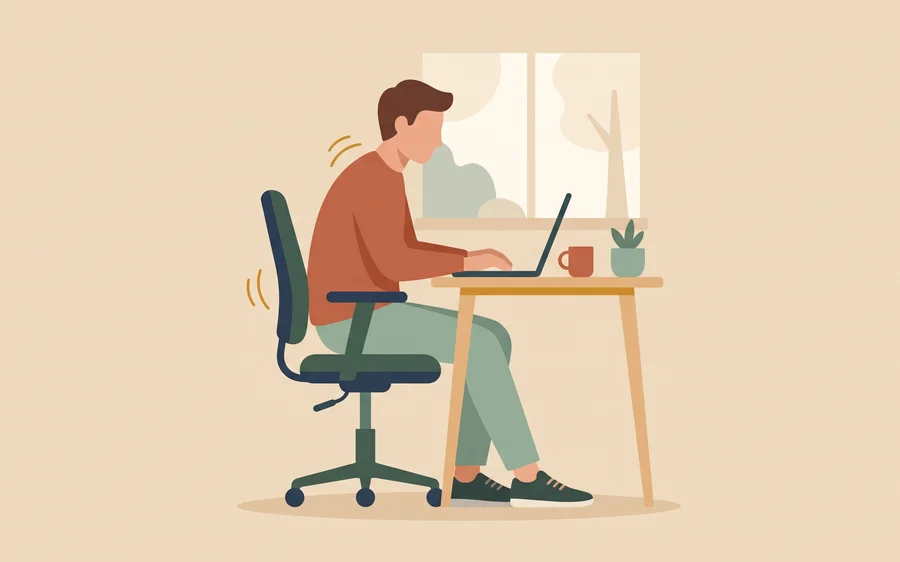
Spending your days sitting in front of a screen takes a real toll on the body. Office work is a subject close to Élise’s heart: it is the topic of her end-of-studies thesis in osteopathy, titled “Impact d’une prise en charge ostéopathique sur la qualité de vie des personnes sédentaires travaillant assis à un bureau” (the impact of osteopathic care on the quality of life of sedentary people who work seated at a desk). She studied how prolonged postures and the stress of sedentary work affect the body, and how osteopathy can help.
What office work can cause
- Neck and shoulder pain. A head tilted towards the screen and rounded shoulders tire the muscles of the neck and upper back, sometimes with headaches.
- Muscle tension. Staying in one position for hours stiffens the trapezius muscles, shoulders and jaw.
- Lower back pain. Long periods of sitting load the lower back and tighten the hips.
- Wrists, hands and forearms. Repeated keyboard and mouse use can cause discomfort, tingling or pain.
- Stress and fatigue. Pressure, mental load and lack of movement feed tension, tiredness and poor sleep.
How osteopathy can help
These problems are common and can all be treated by an osteopath. In an appointment, Élise looks for areas of tension, assesses your posture and the mobility of your neck, back, shoulders and wrists, then uses gentle manual techniques to ease pain and restore movement. She also advises on your workstation set-up, breaks and simple exercises you can do at your desk.
Osteopathy does not replace medical advice. If you have severe or sudden pain, weakness or persistent numbness, see a doctor.